
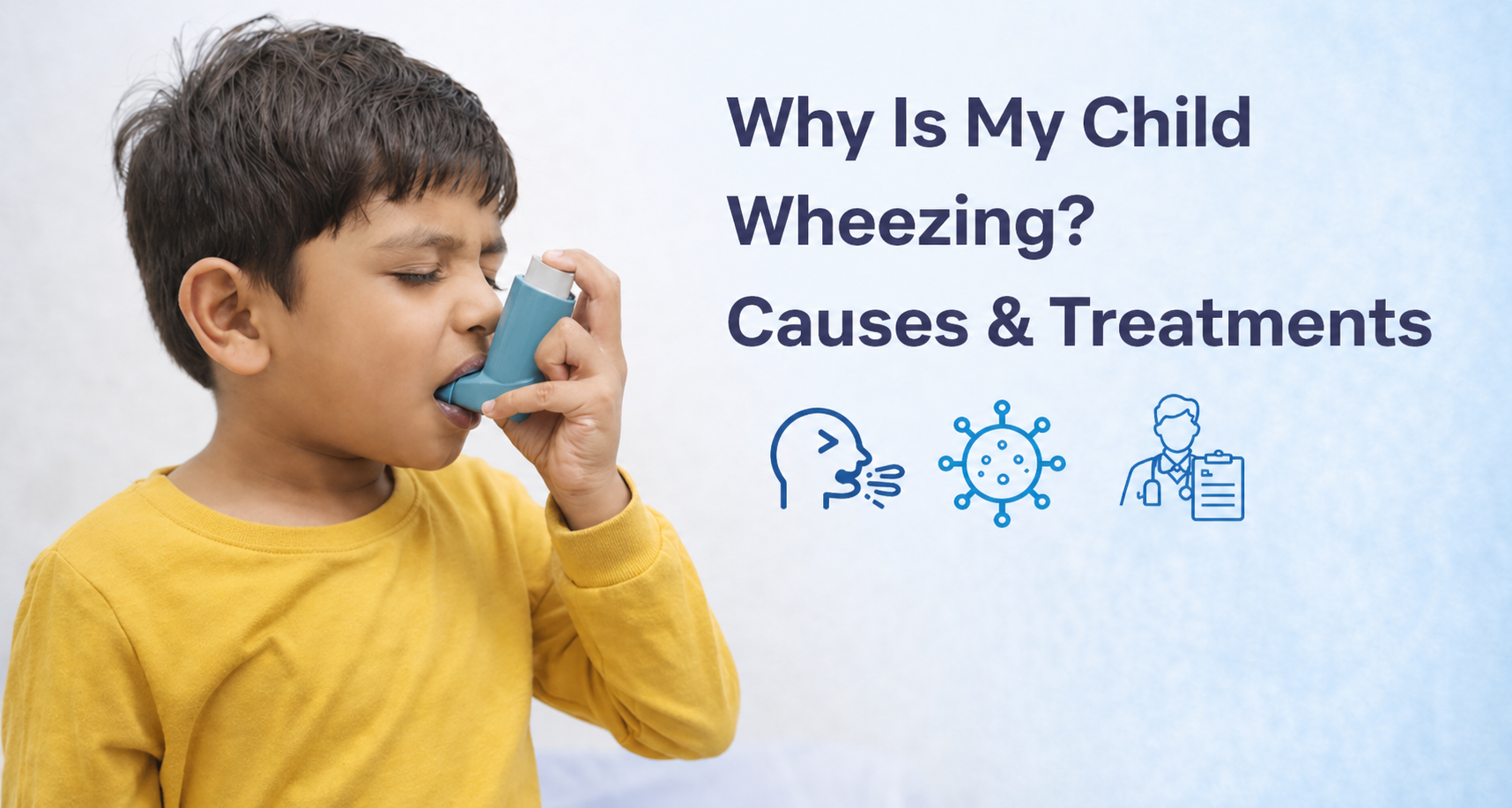
Wheezing is a high-pitched whistling sound that occurs when your child breathes, often caused by narrowing or inflammation of the airways. It’s common in infants and children, and while sometimes it’s mild, it can also signal underlying respiratory issues that need attention. Understanding the causes and treatments can help keep your child safe and comfortable.
🌬️ Common Causes of Wheezing
- Asthma – The most frequent cause in older children; triggered by allergens, exercise, or infections.
- Respiratory Infections – Viral infections like RSV, bronchiolitis, or pneumonia can cause temporary wheezing.
- Allergic Reactions – Exposure to dust, pollen, pet dander, or certain foods may trigger wheezing.
- Congenital Conditions – Structural issues like tracheomalacia or airway abnormalities can lead to persistent wheezing.
- Environmental Irritants – Smoke, pollution, or strong fragrances can exacerbate breathing difficulties.
🩺 Treatments & Management
- Asthma Management: Inhalers, nebulizers, and preventive medications for long-term control.
- Infection Care: Rest, hydration, and antiviral or antibiotic treatment when necessary.
- Allergy Control: Avoid triggers and use antihistamines or prescribed allergy medications.
- Emergency Intervention: Severe wheezing may require oxygen therapy or urgent hospital care.
- Lifestyle & Environment: Maintain clean air at home, avoid smoke, and ensure proper nutrition.
5 FAQs About Wheezing in Children
1. Is wheezing always a sign of asthma?
No. Wheezing can result from infections, allergies, or airway abnormalities, not just asthma.
2. When should I call a doctor?
Seek immediate care if your child has difficulty breathing, blue lips, rapid breathing, or persistent wheezing.
3. Can wheezing be prevented?
Reducing exposure to allergens, smoke, and pollutants, along with proper asthma management, can help prevent episodes.
4. Are inhalers safe for young children?
Yes, when prescribed and used correctly under a doctor’s guidance, inhalers are safe and effective.
5. Can infections cause long-term wheezing?
Some infections may trigger temporary wheezing, but repeated or severe infections should be evaluated for chronic conditions like asthma.