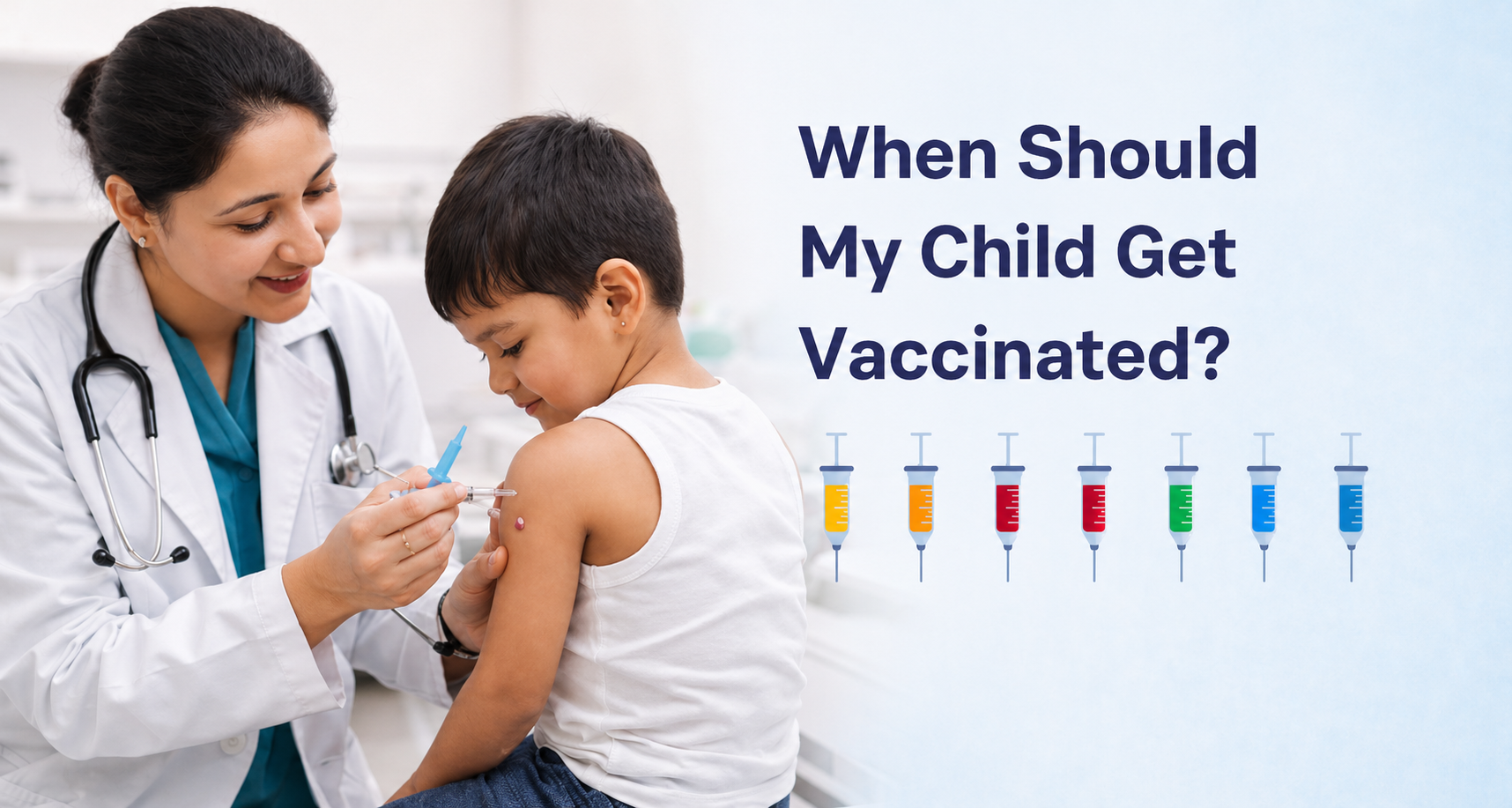
Vaccination is one of the most important steps in protecting your child from serious illnesses. From the first days of life through adolescence, vaccines help build immunity against diseases such as measles, polio, hepatitis, and whooping cough. Following the recommended schedule ensures your child stays healthy and protected.
🍼 Newborn Vaccinations
Vaccines start right after birth. The Hepatitis B vaccine is typically given within the first 24 hours. Early vaccination helps protect newborns from serious infections when their immune systems are still developing.
👶 Infancy (2–12 Months)
During the first year, babies receive multiple vaccines:
- DTP (Diphtheria, Tetanus, Pertussis)
- Polio
- Hib (Haemophilus influenzae type b)
- Pneumococcal
- Rotavirus
- Hepatitis B (follow-up doses)
These vaccines protect against diseases that can be life-threatening at this age.
🧒 Toddler & Childhood Vaccinations
From 1–6 years, children receive booster doses to strengthen immunity:
- MMR (Measles, Mumps, Rubella)
- Varicella (chickenpox)
- DTP and Polio boosters
- Influenza (yearly)
Boosters help maintain protection as children grow and interact more with peers.
🧑🎓 Adolescent Vaccinations
Teenagers also need vaccines to protect against:
- Tdap booster
- HPV (Human Papillomavirus)
- Meningococcal vaccines
- Annual flu vaccine
These vaccines support long-term immunity and prevent infections that can impact health later in life.
5 FAQs About Child Vaccination
1. Can my child get multiple vaccines at the same time?
Yes. Combination vaccines are safe and reduce the number of injections while maintaining protection.
2. What if my child missed a dose?
Don’t worry. Catch-up schedules can be created to ensure your child stays fully protected.
3. Are vaccines safe for children with mild illnesses?
Most mild illnesses, like a cold or low-grade fever, do not prevent vaccination. Each child is assessed individually.
4. Do vaccines have side effects?
Common side effects include mild fever, redness, or soreness at the injection site. Serious side effects are extremely rare.
5. When should I seek medical help after vaccination?
Seek immediate care if your child experiences high fever, severe allergic reactions, or unusual symptoms after a vaccine.