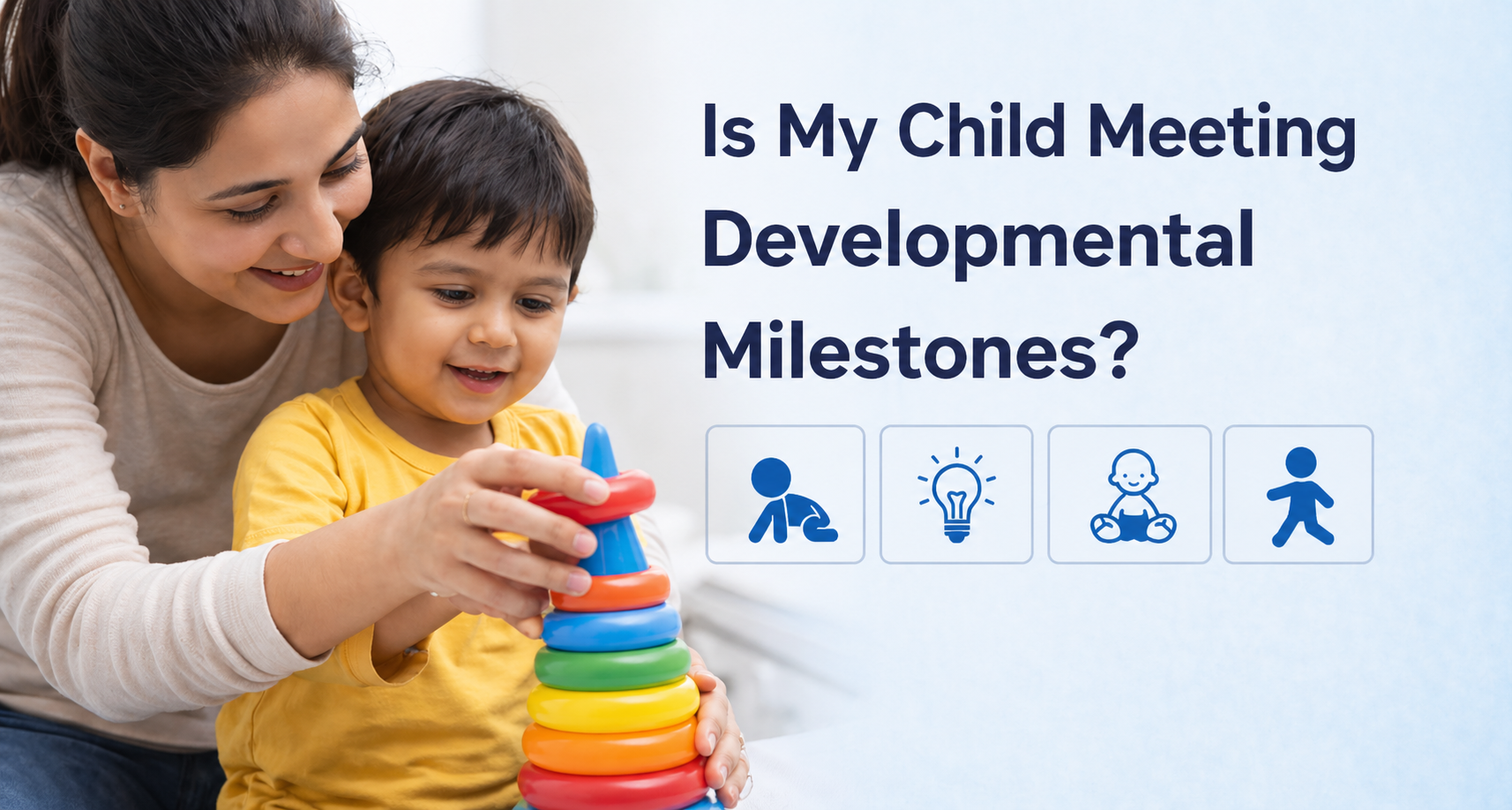
Watching your child grow is an exciting journey, but it can also raise questions about whether they are developing on track. Developmental milestones are skills and behaviors children typically achieve by certain ages, covering physical, cognitive, social, and emotional growth. Knowing what to expect—and when to seek help—can make a big difference in your child’s overall development.
🌱 Understanding Developmental Milestones
Developmental milestones are divided into key areas:
- Gross Motor Skills: Sitting, crawling, walking, running, and climbing.
- Fine Motor Skills: Grasping objects, drawing, stacking blocks, and self-feeding.
- Language & Communication: Babbling, forming words, understanding instructions, and using sentences.
- Social & Emotional Skills: Smiling, playing with others, expressing emotions, and forming relationships.
- Cognitive Skills: Problem-solving, recognizing shapes and colors, counting, and basic reasoning.
Each child develops at their own pace, but noticeable delays or regression may indicate a need for evaluation.
👶 Typical Milestones by Age
- 0–12 Months: Rolling over, sitting without support, first words, social smiling, and responding to sounds.
- 1–2 Years: Walking independently, saying simple sentences, following simple instructions, and showing independence.
- 2–5 Years: Running, climbing stairs, speaking in full sentences, counting, imaginative play, and understanding rules.
- 5–12 Years: Reading, writing, complex problem-solving, social interactions, teamwork, and self-care skills.
Monitoring milestones helps parents track progress and identify areas where extra support might be needed.
🩺 Signs to Watch For
Seek professional guidance if your child:
- Misses key milestones consistently for their age
- Shows regression in previously acquired skills
- Has difficulty communicating or interacting socially
- Struggles with motor coordination or daily tasks
- Exhibits excessive frustration, anxiety, or behavioral challenges
Early assessment can make interventions more effective and improve long-term outcomes.
🧩 How We Support Development
At our clinic, we provide comprehensive developmental evaluations and guidance:
- Personalized assessments to identify strengths and challenges
- Referrals for speech, occupational, or physical therapy if needed
- Guidance for parents on activities to encourage growth
- Regular follow-ups to monitor progress and adjust support
Our goal is to ensure every child reaches their full potential and thrives in all areas of development.
5 FAQs About Developmental Milestones
1. My child is slightly behind peers—is this normal?
Yes. Some variation is normal, but consistent delays or regression should be evaluated.
2. Can developmental delays be treated?
Many delays improve with early intervention, therapy, and support tailored to your child’s needs.
3. How can I track my child’s milestones?
Use milestone charts, journals, or apps to monitor physical, cognitive, social, and emotional skills regularly.
4. When should I be concerned about speech or language delays?
If your child isn’t babbling by 12 months, speaking words by 18 months, or forming sentences by 2–3 years, consult a specialist.
5. Can early intervention improve long-term outcomes?
Absolutely. Early identification and therapy increase the likelihood of children achieving developmental milestones and succeeding in school and social life.